Council

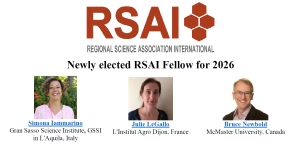
Elisabete Martins

Call for Applications

Higano Award for Outstanding Service to PRSCO 2026

We are pleased to announce that we are now accepting applications for the Higano Award for Outstanding Service to PRSCO 2026 (the Higano Award).

Please submit your nomination along with the nomination form to the PRSCO Secretariat by January 31, 2026 via email <This email address is being protected from spambots. You need JavaScript enabled to view it.>.

For more information on this award, please see (PDF).

The Pacific Regional Science Council Organization (PRSCO) annually presents the Higano Award for outstanding contributions to PRSCO. The award recognizes a member or friend of PRSCO ( individual person) who has made an outstanding long-term contribution to the development and organization of regional science, particularly in the Asia-Pacific region and internationally beyond the regional level, and may be presented to up to two individuals each year on a calendar year basis. The recipient will be presented with the award by the PRSCO President or his/her nominee at the PRSCO 2026 in Australia.

http://www.ab.cyberhome.ne.jp/~soushi-s/PRSCO/PRSCOAwards.html#Higano

REGIONAL STATISTICS, 2025, VOL 15, No 6.

STUDIES

Dear Readers,

We are pleased to say that the 6/2025 issue of Regional Statistics has been published and available online!

CONTENT

Amani Zaouali - Anis Bouabid - Sándor Kovács - György Norbert Szabados - Naim Mathlouthi - Yehia Aldaaja: Comparison of statistical models for analysing the spatial determinants of human capital concentration in Tunisian local labour markets

http://www.ksh.hu/statszemle_archive/regstat/2025/2025_06/rs150601.pdf

László Kovács - Fanni Büki: Regional differences in modelling Covid-19 infections using Google Trends data: evidence from Hungary

http://www.ksh.hu/statszemle_archive/regstat/2025/2025_06/rs150602.pdf

Vusal Ahmadov: Technological capabilities and economic growth in Visegrad countries

http://www.ksh.hu/statszemle_archive/regstat/2025/2025_06/rs150603.pdf

Csaba Fási - Ádám Marton - Petra Szűcs: On the way to Industry 5.0? Analysing the relationship between attitudes regarding AI and material deprivation in Hungary

http://www.ksh.hu/statszemle_archive/regstat/2025/2025_06/rs150604.pdf

Viktória Erőss - Imre Dobos - Tamás Pálvölgyi: Economic performance and energy management – cross-sectional analysis and comparison for EU27 member states

http://www.ksh.hu/statszemle_archive/regstat/2025/2025_06/rs150605.pdf

Martin Lukáčik - Adriana Lukáčiková - Karol Szomolányi: Asymmetries in retail fuel prices in the European Union states

http://www.ksh.hu/statszemle_archive/regstat/2025/2025_06/rs150606.pdf

Jingjing Tao - Mindy Mallory: Spatial sugar price transmission: an exploration in Florida, Texas, and Louisiana

http://www.ksh.hu/statszemle_archive/regstat/2025/2025_06/rs150607.pdf

Géza Tóth - Áron Kincses: Urban–rural population trends in Europe, 2011,2021

http://www.ksh.hu/statszemle_archive/regstat/2025/2025_06/rs150608.pdf


Join us to our social networking sites:

https://www.facebook.com/RegionalStatistics

https://ksh.academia.edu/RegionalStatistics

Wednesday, 19 November 2025 09:19

New RSAI Section called "ERSA Serbia"

Dear RSAI members

We are delighted to announce the official creation of a new RSAI Section called "ERSA Serbia". The application was accepted during the ERSA 2025 conference and officially approved in the NARSC 2025 conference. 

This new incorporation into the ERSA and RSAI community will enable deeper engagement and stronger connections within Europe and also with the global Regional Science community.

Best regards

Dr Ana Viñuela

RSAI Executive Director

Associate Professor, Applied Economics Department

REGIOlab, University of Oviedo,  Spain

European Project EXIT (https://www.exit-project.eu/)


#ERSA2026

Call for Special Session Proposals

is Still OPEN!

Don´t miss this opportunity!

We are now just about one month away from the submission deadline, don’t miss the opportunity to contribute to the scientific programme of the leading international congress in regional science.

Under the theme:

“Global Challenges and Regional Responses in a Transition Era”, ERSA2026 invites reflection on how regions are adapting to profound economic, social, environmental, technological, and geopolitical transformations.

Your special session can bring valuable perspective, foster collaboration, and open new dialogue within our scientific community.

?️ Congress dates: 25–28 August 2026

? Sofia, Bulgaria, In-person event

Let’s shape the future of regional science together at #ERSA2026!


Join #ERSA2026

With a special session topic!

ERSA Annual Congress is the unmissable global meeting point for regional scientists and policymakers worldwide.

Bring added value to ERSA Congress with your Special Session topic and be part of this new promising edition!

Deadline for proposals: 19 December 2025


Follow us and join the conversation

#ERSA2026

Facebook Twitter  Instagram  

To Keep up-to-date with all events on the agenda,

visit ourupcoming events' page on our website.

Facebook Twitter  Linkedin  Youtube  Instagram  

New Issue: Regional Science Policy & Practice

RSPP cover Elsevier
 

Regional Science Policy & Practice

Volume 17, Issue 11, November 2025

Articles

Does high-speed railway speed up manufacturing agglomeration along the line? A case study of the Beijing–Guangzhou high-speed railway

Article Number 100223

Huasheng Zhu, Peixin Huang, Jiachen Yue

Optimizing regional development through smart cities: A case study of Lucknow city, India

Article Number 100226

Arun Pratap Mishra, Subhash Anand, Amit Kumar Batar

The multidimensional phenomenon of left behindness: a local approach

Article Number 100232

Ricardo Perancho, Alberto Díaz-Dapena, Ana Viñuela

Physical infrastructure development in cyclone preparedness strategy: An assessment in the cyclone prone blocks of West Bengal, India

Article Number 100231

Sripurna Kanjilal, Gupinath Bhandari

Decrypting the triad of climate policies, macroeconomic interdependencies and quantitative modelling: A literature review on quantifying climate risks

Article Number 100229

Markus Vogl, Milena Kojić, Stephan Schlüter

Exploring cognitive differences in prospective entrepreneurs: An analysis using propensity score matching

Article Number 100230

Ljiljan Veselinovic, Mirza Kulenovic

International migration, ageing, and growth in rural Spanish provinces: A roadmap for policymakers?

Article Number 100236

Rosella Nicolini, José Luis Roig

Policymaking for circular urban food systems: A systematic literature review of policy instruments and governance arrangements

Article Number 100250

Daniel Polman

Targeted impacts of salary subsidies: A developing country perspective

Article Number 100245

Aomar Ibourk, Karim El Aynaoui

Book Reviews

In Covid’s Wake: How Our Politics Failed Us Covid’s Wake

Article Number 100235

Chiara F. Del Bo

Book.Review of “The Golden Road: How Ancient India Transformed the World” by William Dalrymple.

Article Number 100234

Amitrajeet A. Batabyal

Read the full issue on ScienceDirect

Monday, 17 November 2025 07:48

Winner of 2025 RSAI Dissertation Award

zhiwu wei

Zhiwu Wei is chosen the 2025 winner of the RSAI Dissertation Award for his PhD dissertation "Empirical Essays on Spatial Inequality".

The dissertation engages with one of the most pressing issues in contemporary Regional Science and makes an outstanding contribution, engaging with relevant theoretical work as well as robustly applying a range of quantitative and causal inference methods across multiple empirical contexts and countries. The research results are clearly presented and rigorously discussed in light of the current literature, demonstrating a deep understanding of both theory and empirical evidence. The dissertation provides novel insights into the causes and consequences of spatial inequality in both Global and Global South contexts. The findings provide valuable implications for place-sensitive policy design, particularly in addressing inequality and fostering inclusive regional development. Among the key findings of the dissertation is the identification of the causal impact of exposure to urban density during a person’s “impressionable years” on outcomes later in life, suggesting that more time in urban areas during these years makes respondents more supportive of immigrants and gender equality later in life. The dissertation also presents a new measure of spatial inequality for regions in Global South countries and examines its association with georeferenced social protests. The analysis suggests that regions with higher levels of spatial inequality experience more frequent protests. The research also examines the extent to which the Brexit vote triggered polarization in economic expectations and spending intentions between pro- and anti-Brexit voters and identifies strong polarization effects between these two groups. Another key highlight of the research is the analysis of the impact of the Brexit vote on regional aggregate consumption suggesting divergence in consumption of automobiles and housing transactions between regions with different shares of leave voters.  Overall, the dissertation represents an extremely high-quality, relevant, and impactful contribution to the field of Regional Science and beyond.

Dr Wei was awarded his PhD (viva passed with no corrections) in Land Economy from the University of Cambridge in October 2024. He was supervised by Dr Davide Luca.

JanetKohlhase headshot for RSAIRSAI is excited to announce the appointment of Prof. Janet Kohlhase as the new President for the 2027-2028 term. She is from the Department of Economics at the University of Houston, US.

Congratulations! In 2026, she will assume the role of President-Elect and collaborate with Prof. Hiroyuki Shibusawa, the current RSAI President, to transition into the President position in 2027.

New LARSA and ERSA representatives (2026-2028) in the RSAI Council

LARSA Representatives (2026-2028)

ERSA Representative (2026-2028)

mauricio

Mauricio Oyarzo

(University of Concepción (UdeC),

Chile)


enrique

Enrique Gilles

(Colegio de Estudios Superiores

de Administración, Colombia)


dimitris

Dimitris Kallioras

(University of Thessaly, Greece)


The Council warmly thanks the LARSA and ERSA representatives ending their term for their service:

Patricio Aroca, Universidad Nacional Andrés Bello, Chile

Carlos Azzoni, University of São Paulo, Brazil

Eveline Van Leeuwen, Wageningen University, Netherlands

Call for papers 

REGIONS BETWEEN INNOVATION AND SUSTAINABILITY:
THE CHALLENGES FOR DEVELOPMENT POLICIES

Florence, June 24-26, 2026

The Italian Association of Regional Science (A.I.S.Re), the Italian section of the Regional Science Association International (RSAI), announces its 47th Annual Scientific Conference.
The conference, which welcomes contributions from national and international scholars across a variety of disciplines related to regional science, will be held at the Dipartimento di Scienze per l’Economia e l’Impresa, Università di Firenze, Polo delle Scienze Sociali di Novoli (Address: Via delle Pandette 9, 50127 Firenze).

The main theme of the conference will be exploring how territories can face the profound economic, social, and environmental transformations currently underway. Innovation and sustainability today represent inseparable dimensions of regional development: on the one hand, technological and organizational innovation opens new opportunities for growth; on the other, environmental and social sustainability requirements set essential constraints and goals for the future of local communities.
Digital and organizational innovation is reshaping production systems and labor markets. New technologies offer the potential to increase the competitiveness of regions, improve access to advanced services, and stimulate diversification processes. At the same time, however, they generate new challenges for employment and social cohesion. Automation, artificial intelligence, and new work models are transforming the skills required, increasing the risk of inequalities between territories and social groups. Social sustainability, therefore, requires that these processes be accompanied by targeted policies for training, inclusion, and the strengthening of local capacities.
At the same time, environmental sustainability is an essential condition for the future of territories. Climate change, the energy transition, and the shift toward circular production models are redefining regional development paths. Companies are called upon to reorganize supply chains, processes, and governance models, facing the costs of reconversion and operating in a context of tensions related to tariffs, trade barriers, and geopolitical risks that can alter policy priorities and reshape the timing and nature of international cooperation. At the same time, opportunities are emerging through the creation of new sectors and “green” jobs, which require policies capable of guiding and supporting these transformations, balancing economic growth, social inclusion, and environmental protection.

In this context, public policies play a decisive role in strengthening the ability of territories to adapt, innovate, and reduce inequalities—reconciling economic development, social cohesion, and ecological transition. The conference aims to foster an open and interdisciplinary debate on how to rethink regional development policies in light of the challenges posed by innovation and sustainability, contributing to shaping visions and strategies for a fairer and more resilient future.
Besides the main theme, the A.I.S.Re conference encourages discussion on the major topics in regional science. Thus, A.I.S.Re invites all those interested to present original scientific works on the following themes:

A. Governance, regional and territorial public policies, European programming
B. Growth, decline, and regional disparities
C. Globalization, value chains and local production systems
D. Methods of territorial analysis and spatial econometrics
E. Labor, welfare, personal services and social policies
F. Tourism, culture and local development
G. Urban planning, real estate market and city development processes
H. Infrastructure, transport, mobility and local development
I. Wellbeing, sustainability, and local development
L. Urban development and agglomeration economies
M. Development and local entrepreneurship
N. Innovation, creativity and local development
O. Policy evaluation methods

HOW TO JOIN THE ASSOCIATION CONFERENCE

There are two ways to participate in the Conference:

  • With the organized sessions. Participants can propose themselves as session organizers (no more than two sessions per organizer) on specific themes. The proposal can be submitted directly from the login area of the website, by entering the name of the scientific manager, the session title, and the tentative number of presentations. The deadline for the submission is December 5, 2025.
  • with individual papers. Those interested should submit an abstract by January 15, 2026, directly from login area of the website. The detailed instructions for presenting authors on the editing of papers are available at the conference website (link here).

IMPORTANT DEADLINES

December 5, 2025 Deadline for proposing organized sessions
January 15, 2026 Abstract submission
February 5, 2026 Paper acceptance
March 22, 2026 Early bird registration
April 15, 2026 Registration (full fee)
May 7, 2026 Papers and presentations submission
May 22, 2026 Programme publication on the website (www.aisre.it), based on payed registrations.

AWARDS
AISRe promotes the diffusion of studies in regional science by awarding young scholars with:
• Best PhD Dissertation Award
• Best young scholar paper
The call for candidatures and their instructions are available on A.I.S.Re. website. The deadline for the application is March 3, 2026.

CONFERENCE REGISTRATION AND MEMBERSHIP

Registration and participation in the Conference is subject to A.I.S.Re. membership, as individual, corporate or young member, available in the login area. The membership in the Italian Association of Regional Science will be valid for the 2026/2027 social year. Registration and membership fees are available at this link. A.I.S.Re. membership benefits include:

  • the subscription to Scienze Regionali (Il Mulino) for the following calendar year;
  • the volume of the AISRe E-book (Donzelli Editore);
  • the registration to the Regional Science Association International (RSAI), which includes an online subscription to the journal Papers in Regional Science and Regional Science Policy and Practice, for the following calendar year, the opportunity to pay a reduced fee at the Annual Conferences of the European Regional Science Association (ERSA) and the Regional Science Association International (RSAI).
  • Young scholars have also the opportunity to participate to the Summer/Winter Schools of AISRe.

Local Organising Committee

  • Annalisa Caloffi, Università degli Studi di Firenze (Chair)
  • Mario Biggeri, Università degli Studi di Firenze
  • Marco Bellandi, Università degli Studi di Firenze
  • Francesco Capone, Università degli Studi di Firenze
  • Stefano Clò, Università degli Studi di Firenze
  • Andrea Ferrannini, Università degli Studi di Firenze
  • Lucia Ferrone, Università degli Studi di Firenze
  • Niccolò Innocenti, Università degli Studi di Firenze
  • Federico Martellozzo, Università degli Studi di Firenze
  • Stefania Oliva, Università degli Studi di Firenze
  • Maria Grazia Pazienza, Università degli Studi di Firenze
  • Filippo Randelli, Università degli Studi di Firenze
  • Giorgio Ricchiuti, Università degli Studi di Firenze

Scientific Commitee

  • Mario Biggeri, Università degli Studi di Firenze
  • Marco Bellandi, Università degli Studi di Firenze
  • Annalisa Caloffi, Università degli Studi di Firenze
  • Giulio Cainelli, Università degli Studi di Padova
  • Francesco Capone, Università degli Studi di Firenze
  • Stefano Clò, Università degli Studi di Firenze
  • Andrea Ferrannini, Università degli Studi di Firenze
  • Lucia Ferrone, Università degli Studi di Firenze
  • Niccolò Innocenti, Università degli Studi di Firenze
  • Federico Martellozzo, Università degli Studi di Firenze
  • Marco Modica, Gran Sasso Science Institute
  • Stefania Oliva, Università degli Studi di Firenze
  • Maria Grazia Pazienza, Università degli Studi di Firenze
  • Eleonora Pierucci, Università degli Studi Roma Tre
  • Filippo Randelli, Università degli Studi di Firenze
  • Giorgio Ricchiuti, Università degli Studi di Firenze

Executive Board A.I.S.Re.

  • Stefano Aragona, INBAR Sezione Lazio
  • Giulio Cainelli, Università degli Studi di Padova
  • Annalisa Caloffi, Università degli Studi di Firenze
  • Andrea Caragliu, Politecnico di Milano
  • Viviana Celli, Università di Roma La Sapienza
  • Augusto Cerqua, Università di Roma La Sapienza
  • Camilla Lenzi, Politecnico di Milano
  • Marco Modica, Gran Sasso Science Institute
  • Eleonora Pierucci, Università degli Studi Roma Tre
  • Pietro Pizzuto, Università degli Studi di Palermo
  • Paolo Postiglione, Università degli Studi “G. d’Annunzio” Chieti-Pescara
  • Domenico Scalera, Università del Sannio
  • Lisa Sella, IRCrES-CNR – Istituto di Ricerca sulla crescita economica sostenibile
  • Daniela Storti, Consiglio per la ricerca in agricoltura e l’analisi dell’economia agraria (CREA)
  • Gaetano Vecchione, Università degli Studi di Napoli Federico II.

Secretary AISRe
Diana Sarmiento, This email address is being protected from spambots. You need JavaScript enabled to view it.

Monday, 03 November 2025 07:46

New Councillor at large elected

During the month of October, RSAI members voted for the election of new Councillor at large on the RSAI Council. The following candidate was eventually elected:

Rafael Garduño

Prof. Rafael Garduño-Rivera (School of Economics & Business, University of Navarra, Spain) 

Many congratulations to our new colleague! He will start their new term on Jan. 1, 2026.

At the same time, the Council warmly thanks the Councillor at large ending her term (Prof. Daniela Luminita-Constantin (Bucharest University of Economic Studies)) for her service.

Page 3 of 263

About Us

The Regional Science Association International (RSAI), founded in 1954, is an international community of scholars interested in the regional impacts of national or global processes of economic and social change.

Get In Touch

Regional Science Association International
University of Azores, Oficce 155-156, Rua Capitão João D'Ávila, 9700-042 Angra do Heroísmo, Azores, Portugal

Hit Counter

Today5013
Yesterday10974
This week37867
This month125526
Total45114121

Wednesday, 14 January 2026

Search