
Elisabete Martins
The Maxine Goodman Levin School of Urban Affairs seeks adynamic faculty member at the rank of Assistant Professor
The Maxine Goodman Levin School of Urban Affairs seeks adynamic faculty member at the rank of Assistant Professor. The start date is August 16, 2027.
Successful candidates will contribute fully to the Levin School through teaching, research, and service. While we will consider all areas of expertise related to urban planning and/or urban affairs, we are particularly interested in candidates who can bolster our research and teaching portfolio in urban real estate development and finance; community development; environmental planning and policy; and/or applications of data science and/or AI in urban affairs research and practice. We especially encourage candidates who have experience and interest in engaged teaching and research.
This position requires teaching on-campus courses. In addition, you may be assigned to teach off campus, evenings, weekends, and via distance learning technology, depending upon student need for the delivery of instructional services.
The Levin School of Urban Affairs is ranked among the top urban affairs schools in the nation, including #3 in urban policy and #10 in local government. The school offers four master’s degrees including the fully accredited Master of Public Administration and Master of Urban Planning and Development, along with a Master of Nonprofit Administration and Master of Science in Urban Studies. We also have a Ph.D. in Urban Studies & Public Affairs and six undergraduate majors in community planning, environmental studies, nonprofit administration, organizational leadership, public policy and management, and public safety management.
The Levin School is housed within the Levin College of Public Affairs and Education, which also includes the School of Education & Counseling, the School of Communication, and the Department of Criminology and Sociology. The Levin College houses a number of research and career enhancement centers such as the Center for Economic Development, the Energy Policy Center, and the Center for Public and Nonprofit Management. This dynamic environment provides opportunities for interdisciplinary, applied, and engaged research and teaching.
CSU aspires to be a national leader in social and economic mobility. We will be a great place to learn and work. CSU is striving to be a nationally recognized and student focused public research institution that provides accessible, affordable, and Engaged Learning opportunities for all.
For more information and how to apply, please visit: https://hrjobs.csuohio.edu/postings/27380
New Issue 66 of Investigaciones Regionales - Journal of Regional Research

Investigaciones Regionales - Journal of Regional Research has published the 66th Issue, the third volume corresponding to 2026.
Below you will find the summaries of the papers published in this volume, which can be accessed at https://investigacionesregionales.org/en/revista/issue-66/
We invite authors to submit papers at https://investigacionesregionales.org/en/envio-de-articulos/submission-of-papers-and-others-contributions/
Issue 66
Articles
Paola Beccherle, Stefania Oliva, Luciana Lazzeretti
This research investigates how museum and city reputations are perceived in online media narratives and explores the role of museums’ online communication in shaping this relationship. To examine these dynamics, the case of the Uffizi Galleries and Florence was investigated. The study employs a mixed-methods approach, combining the analysis of interviews with museum staff regarding digital communication strategies with topic modelling techniques on newspaper articles. Findings reveal that the Uffizi and Florence possess strong brands, resulting in distinct reputations on both national and international levels. However, a more dynamic interplay between the two reputations emerges within local media narratives, reflecting deliberate efforts by the Uffizi’s management to engage with the city. The results suggest that closer alignment between city branding and cultural institutions’ strategy could enhance the city’s national and global reputation.
Keywords: Museum’s reputation; city’s reputation; topic modelling; Uffizi Galleries; Florence
Ana Cárcaba, Francisco J. Delgado, Eduardo González, Maria J. Presno
Convergence in social well-being: Are Spanish regions closing the gap?
The literature on Quality of Life (QoL) and Subjective Well Being (SWB) highlights the idea that economic indicators, such as GDP, do not provide an accurate account of the real progress of societies. We study the evolution of social progress through several social indicators for the 17 Spanish regions during the period 2008-2020. In searching for patterns of convergence, we apply the club convergence approach. The data available point to the existence of three clubs for the indicators considered: material conditions and QoL. Therefore, there are no signs of global convergence. The analysis of the data also reveals that some of the richest regions in terms of GDP (Madrid and Cataluña), achieve only moderate results in terms of quality of life. Some policy recommendations arise from comparing the evolution of well-being and GDP per capita.
Keywords: Quality of life; subjective well-being; convergence; Spain
Albert Busca López, Albert Carreras de Odriozola
A core-periphery comeback? Clustering European Union Social Progress Index (EU-SPI)
Regional cohesion in the European Union (EU) remains a major issue, shaping EU policies, EU budget allocation and regional welfare. We dig into the EU-Social Progress Index published in 2020 to explore its territorial/regional clustering patterns. Are there EU internal frontiers –clusters-? Do they coincide with the member States? Do they have other influences? What determines belonging to different clusters? Is there any resemblance between the GDP per capita and the SPI regional distribution? We divide the EU NUTS-2 map into clusters using hierarchical clustering. We look for the optimal number of clusters, and we compare the outcome with state borders, paying attention to discrepancies or to state combinations. Our main finding is that the optimal clustering is two, and that they are very robustly defined. Of course, this leads towards reassessing core-periphery approaches and the impact of the great recession and the sovereign debt crisis. Another major finding is that the EU-SPI clustering reveals major discrepancies with the per capita GDP clustering. Some NUTS-2 regions perform in SPI terms much better than expected by per capita GDP. On the contrary, some NUTS-2 regions perform in SPI much worse than expected by per capita GDP. The discrepancies suggest major public policy successes and failures.
Keywords: Clustering; social progress; European Union; regional studies; regional welfare
Derya Fındık, Dilek Çetin, Bayram Veli Doyar
How does an entrepreneurial university affect regional economic development?
This paper aims to reveal the role of entrepreneurial universities in the regional economic development of Türkiye. By using spatial econometrics tools including cluster maps, namely LISA and Geary, and spatial regression models for NUTS 3 regions (81 provinces), the effect of the entrepreneurial universities on regional development indicators, i.e., gross domestic product (GDP), GDP per capita (GDPPC), and the number of enterprises is examined from 2012 to 2017. Both the number of entrepreneurial universities and their presence is effective on all three regional development indicators. Additionally, investing in education, promoting export activities, and developing physical infrastructure should be prioritized in provincial development plans to overcome regional disparities.
Keywords: Entrepreneurial university; region; development; spatial econometrics
Pablo García-García
Just transition in post-mining regions: Governance and socio-economic strategies in Wales and León
A just transition is essential for sustainable policies and a net-zero economy, ensuring that climate action is aligned with social justice and inclusive of vulnerable communities. This note compares the just transition frameworks of Wales and León (Spain), both post-mining regions, which have developed regionally tailored approaches. By examining governance structures, stakeholder engagement, economic restructuring methodologies, and challenges in implementation, this note highlights the distinct and shared features of these frameworks, offering insights into their potential for addressing both ecological and social inequalities in transitioning to a low-carbon future.
Keywords: Just transition; net-zero economy; post-mining regions; governance; economic restructuring
Arturo Alatrista-Corrales, Maritza Chirinos-Marroquín, Jackeline Lucía Campos-Vera, Maribel Jessica Chullunquia-Pari, Angel Jeancarlo Coaquira Flores, Cecilia Arace Escobar-Huisa
This study proposes the application of the methodological framework for functional analysis of technological innovation systems in the context of the implementation of a regional smart specialization strategy. The case focuses on the solar energy industry in the Arequipa region – Peru. For this purpose, interviews, surveys and workshops were conducted with more than 70 stakeholders. The results allowed for the formulation of specific initiatives based on the identification of certain blocking mechanisms. The proposed approach can contribute to the development of innovation policies with regional scope, especially in territories with low scientific-technological infrastructure.
Keywords: Solar energy; technological innovation systems (TIS); regional development
Juan Fernández-Sastre, Juan Esteban González
Productivity, agglomeration, and diversity: A multilevel analysis of firms in ecuadorian regions
This paper analyzes how territorial conditions influence the productivity of manufacturing and service firms in Ecuador. We employ multilevel models to estimate the effects of the urban population share and regional sectoral diversity on total factor productivity and labor productivity, also incorporating the moderating role of innovation. The results show that approximately 5% of the differences in productivity are attributable to geographic location. The share of urban population has a positive effect in both sectors, while sectoral diversity benefits manufacturing exclusively. Likewise, it is observed that innovative manufacturing firms enhance the benefits of both agglomeration and diversity, while service innovative firms obtain additional advantages from diversity.
Keywords: Productivity; agglomeration economies; sectoral diversity; multilevel models; developing countries
Marc Garcia-Ruiz
Regional authority and business dynamics across european regions
Since the mid-20th century, a significant number of countries have transferred powers to subnational governments, which has had a considerable impact on the economic and institutional landscape. In this context, local governments have become essential in the implementation of policies that directly affect the firm’s demography. Consequently, we analyze the impact of regional authority on a set of outcomes previously unexplored in the literature: the level of entrepreneurship and firm survival. Results suggest that greater autonomy can stimulate regional business dynamics, increasing enterprise creation but lowering survival rates. Moreover, these effects appear to be conditioned by institutional quality, where a stronger institutional framework enhances the effect of regional authority on business entry and mitigates its impact on survival.
Keywords: Regional authority; decentralization; business demography
Manuel Gómez Zaldívar, Fernando Gómez Zaldívar
Economic complexity literature highlights the role of productive capabilities and industrial sophistication as central drivers of long-term development, yet most empirical evidence remains concentrated in a limited set of countries. This paper extends the debate by examining Mexico, a middle-income economy deeply integrated into global markets and characterized by stark regional disparities. Using data from the 2004 and 2019 Economic Censuses, we assess changes in manufacturing specialization and complexity across Mexican regions. The results show that while all regions increased their specialization and diversification, only those able to transition into more complex manufacturing industries expanded their share of national output—patterns consistent with findings for China, Italy, and Brazil. These findings underscore the importance of the quality of diversification, not just its extent, as a determinant of regional economic performance. More broadly, the Mexican case illustrates how integration into global value chains does not automatically guarantee convergence: sustained development depends on the accumulation of capabilities and upgrading into sophisticated activities. The study thus contributes to international debates on structural transformation, regional inequality, and the conditions under which emerging economies can leverage industrial complexity for inclusive growth.
Keywords: Industry groups; economic complexity; Mexico’s municipalities
Josep Capó-Vicedo, José-Vicente Tomás-Miquel, Francisco Javier Ortega-Colomer, Eloi García-Climent
Small and medium-sized enterprises (SMEs) operating in traditional manufacturing clusters face acute challenges when sudden systemic shocks disrupt established markets and production routines. This article analyses how SMEs embedded in a mature industrial cluster responded to the COVID-19 crisis, focusing on the Valencian textile district in Spain, a Southern European manufacturing ecosystem that remains under-represented in resilience research. Using a mixed-methods design combining survey data from 80 SMEs with complementary managerial interviews, the study examines how dynamic capabilities, strategic innovation behaviours, and organisational characteristics relate to firms’ ability to maintain or increase turnover during the crisis.
The results show that product development strategies are most strongly associated with resilience, substantially increasing the likelihood of maintaining or growing turnover. Diversification into technical textiles also displays a positive, though more moderate, relationship with resilience, while conventional R&D indicators exhibit limited short-term explanatory power in this mature manufacturing context. Firm age shows a negative association with resilience, suggesting greater adaptability among younger firms. Gender composition also matters: firms with a higher share of female employees, and to a lesser extent women in management positions, tend to display greater adaptive capacity. Qualitative insights from managerial interviews help explain how strategic agility and organisational diversity enabled rapid adaptation under conditions of extreme uncertainty.
Overall, the findings indicate that during abrupt, demand-driven systemic shocks, agile and market-oriented innovation strategies play a more decisive role in short-term SME resilience than formal R&D investment in traditional industrial clusters. The study offers actionable implications for SME managers and regional policymakers seeking to strengthen cluster resilience through flexible product strategies, selective technical upgrading, and inclusive organisational structures.
Keywords: SME resilience; strategic innovation; regional clusters; COVID-19; territorial development
#ERSA2027 Call for Special Session Proposals is OPEN

|
||||||||||||||||||||||||||||||||
|
||||||||||||||||||||||||||||||||


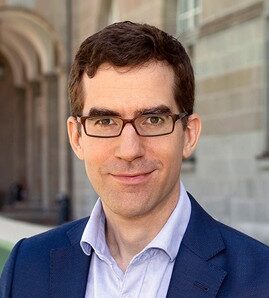


Winner of 2026 RSAI Dissertation Award: Max Roessler
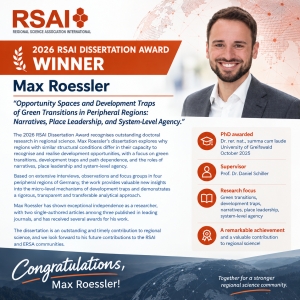
 Doctor Max Roessler has been chosen as the winner of the 2026 RSAI Dissertation Award for his work "Opportunity Spaces and Development Traps of Green Transitions in Peripheral Regions: Narratives, Place Leadership, and System-Level Agency."
The dissertation asks a central question in regional science: why do regions with similar structural conditions differ in their capacity to recognize and realize development opportunities? Examining this in the context of green transitions, it brings the literature on development traps and path dependence together with recent work on opportunity spaces, change agency, place leadership, and system-level agency.
The empirical work is excellent, drawing on extensive interviews with regional stakeholders in four peripheral regions of Germany, observations from regional events, and two cross-regional focus groups. As one committee member put it, narratives are treated "not as background colour but as an indicator of regional trajectory," and they are examined through a transparent multidimensional narrative analysis that can be applied elsewhere. A key finding is that regions can become locked into "maintenance agency" when negative narratives dominate, even where green transitions have opened real opportunities. This gives the development-trap literature micro-level mechanisms that existing indicators cannot capture. Dr Roessler has also demonstrated his independence as a researcher, with two single-authored articles among the three published in leading journals in the regional science field, and has received several awards for his work.
Overall, the dissertation is an outstanding and timely piece of work that deepens our understanding of place-sensitive green transitions, and we look forward to his future contributions to the RSAI and ERSA communities.
Dr Roessler was awarded his doctorate (Dr. rer. nat., summa cum laude) by the University of Greifswald in October 2025, under the supervision of Prof. Dr. Daniel Schiller.
New Issue: Papers in Regional Science | Volume 105, Issue 5, October 2026

Articles
Book reviews
|

New Issue: Regional Science Policy & Practice | Volume 18, Issue 10, October 2026

|
|
Articles
|
|
|
|
|
|
Book Reviews
|
|
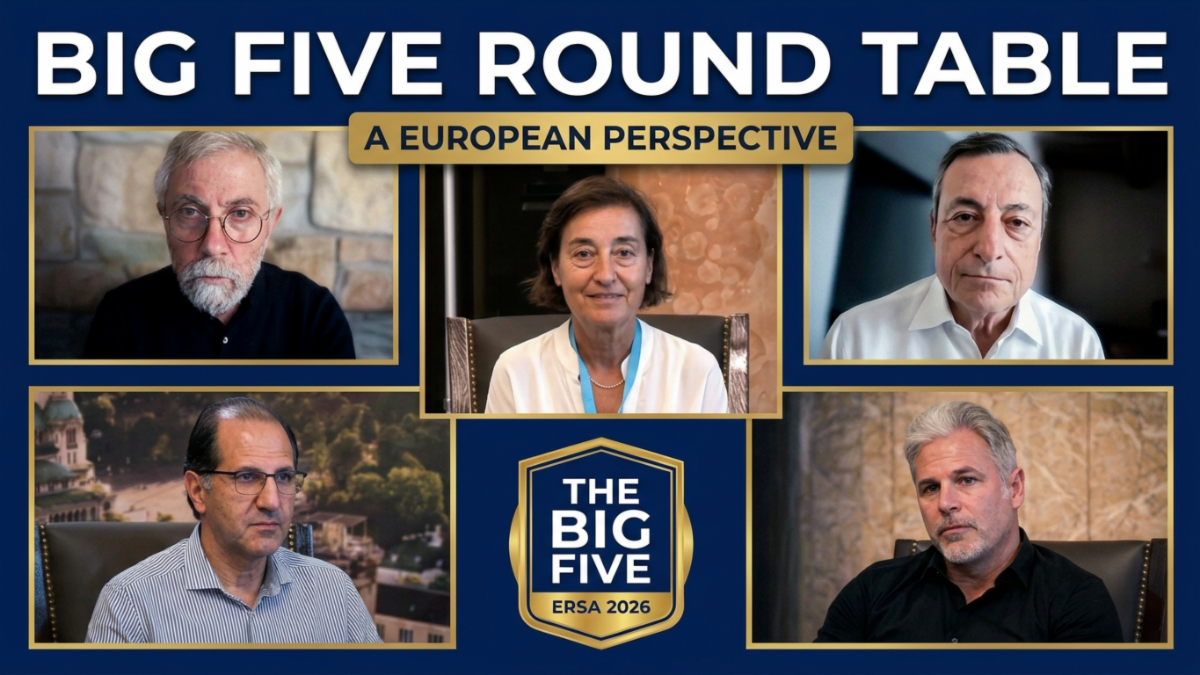
ERSA2026 Congress Recordings Now Available

|
||||||||||||||||||||||||||||||||||||||||||||||||||||||||||||||









RSPP Best Reviewer Award
Regional Science, Policy & Practice Best Reviewer Award
(All reviewers of in Regional Science Policy and Practice in 2026 will be considered for the award)
Regional Science, Policy & Practice values the crucial role placed by our colleagues who kindly agree to work for free for the benefit of the journal; help improving the quality of the papers published; and withstand the pressure we all feel, both as authors as well as of editors, triggered by the growing number of journals, journal articles, and, consequently, of the requests sent and received to review papers.
Regional Science, Policy & Practice values the crucial role placed by our colleagues who kindly agree to work for free for the benefit of the journal; help improving the quality of the papers published; and withstand the pressure we all feel, both as authors as well as of editors, triggered by the growing number of journals, journal articles, and, consequently, of the requests sent and received to review papers.
The best reviewer for each calendar year will be chosen as follows.
Each February, the Editors of the journal nominate a maximum of two reviewers who contributed to the improvement of papers they handled. They then gather within Apr. 1 to discuss their proposals, based on the following criteria:
- Contribution to the paper's improvement;
- Number and quality of reviews provided in the calendar year;
- Capacity to meet the review deadlines;
- Use of a constructive and inclusive language in the reviewer's reports submitted.
The editors submit the name of the winner, and a one paragraph motivation for their choice, within mid April, to the RSAI's Executive Director, who then informs the RSAI Council members.
The winner will be presented a certificate at a major RSAI event in the same calendar year (ERSA, NARSC, LARSA, PRSCO, or RSAI World Congress) at the choice of the reviewer.
They will also be offered by the editors a waiver for the APC of an article submitted by the winner in the subsequent calendar year, should the paper be eventually accepted, and irrespective of the actual date of acceptance.
ERSA Monthly E-news - August 2026

|
|||||||||||||||||||||||||||||||||||||||||||||||||||||||||||||||||||||||||||||||||||||||||||||||||||||||||||||||||||||||||||||||||||||||||||||||||||||||||||||||||||||||||||||||||||||||||||||||||||||||||||||||||||||||||||||||
|





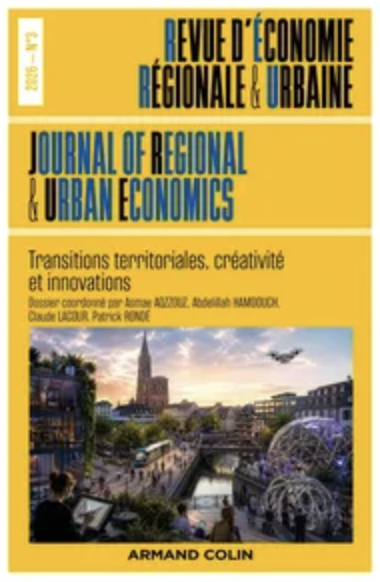









Call for Applications for RSAI Councilors-at-large

Dear RSAI members,
It is time to elect three "Councilors-at-large" to be part of the RSAI Council for the period 2027-2029.
The RSAI and its internal organization are not very well known. Please take 2 minutes of your time to read how it works! (https://regionalscience.org/index.php/about-us.html)
The RSAI Council comprises the RSAI President, the RSAI Executive Director, 3 representatives from each supranational (ERSA, LARSA, PRSCO, and NARSC), and 5 Councilors-at-large.
While 3 members are elected from each supranational to keep geographical balance within RSAI, the 5 "councilors at large" will be elected by the members of the RSAI Council among the self-nominated applicants, who will simply need to be an RSAI member in good standing.
The positions on the RSAI Council held by Prof. Camilla Lenzi, Prof. André Chagas and Prof. Katarzyna Kopczewska will expire at the end of 2026.
If you are interested in being a councilor-at-large, please send a letter of interest including your professional CV and a photo to the RSAI Secretariat (This email address is being protected from spambots. You need JavaScript enabled to view it.) before September 30th 2026.
The election of a councilor-at-large for the period 2027-2029 will take place electronically by RSAI members during the month of October 2026.
About Us
The Regional Science Association International (RSAI), founded in 1954, is an international community of scholars interested in the regional impacts of national or global processes of economic and social change.